It’s taken me 18 years to put words to this journey. For those who know me, you’re aware – and many still aren’t, by the way – that I’m visually impaired, legally blind even. This comes with a quirky benefit: a ₹1 Lakh income tax deduction!
This series (hopefully, there will be more!) aims to capture the random thoughts of a visually impaired person. While brevity is key, as Morgan Housel wisely puts it, I wanted to set the stage upfront. Why now? Perhaps it’s an attempt to show that life always throws curveballs, and it’s about dealing with them as they come, living life to the fullest without making a big deal out of it. After all these years, I know my experience isn’t unique, nor am I doing anything extraordinary. But if sharing my journey helps even one person, it’s worth every word.
Eighteen Years Ago: The Shift
December 2006 and January 2007 were peak times for me at the bank. I was riding high, playing a crucial role in bringing mobile banking to India – a novelty back then. That’s when I noticed an occasional blur in my left eye. I’d always prided myself on 6/6 vision, yet secretly hoped for spectacles, thinking they’d make me look intelligent and smart. I got the specs, but they made no difference. I blamed the lens quality until that day in April 2007. During an office presentation, I closed my right eye and realized my left eye saw nothing. Concern turned to alarm. An ophthalmologist diagnosed optic neuritis, a “benign” condition, and prescribed steroids. But instead of improving, my optic nerve atrophied within a month. Doctors were stumped, calling it a “freak condition” with no cure. Ironically, my eye pressures shot up during steroid treatment because I was a “steroid responder”. Throughout this, I felt surprisingly calm. When the final verdict came, I was cool. My only immediate adjustment? Aiming my camera with my right eye. (Did I forget to mention I loved photography and driving?)
The World Starts to Tilt: October 2007
Then, on October 29th of that same year, my world nearly crumbled. With only one good eye, any minor change was glaring. During another presentation, I felt something was wrong with my right eye. Panicked, I rushed to an ophthalmologist. Days before, during Dasara shopping, I’d felt a subtle shift that had tensed me. This doctor confirmed all was “well,” but I knew better.
My cousin’s wife connected me with a senior ophthalmologist. His verdict: “computer stress syndrome.” I pleaded with him days later, “Doctor, I was fine even when I lost my left eye. Something is definitely wrong.” He suggested an MRI. This was my breaking point. I was devastated, crying daily in the bathroom to shield my family. My career, just taking off, felt over. I envisioned my wife burdened with everything. But then, on the morning of my MRI, after nearly a week of despair, something shifted. Amidst tears, I suddenly stopped. I vowed then and there: I wouldn’t cry. I would live my life, and I would ensure my family was fully cared for. The decision to be happy was made. I vividly remember speaking to my CIO the day before, tears streaming, telling him I didn’t know where life was headed. But after that bathroom epiphany, I was all smiles. Inside the MRI, I imagined being in a techno club with all those beats! Back at work, I entered a meeting, cheerful. When my CIO asked if I was okay, I told him, “No, but I’ve decided to be happy, come what may.”
The Unseen Path and a New Normal
What changed in me? I attribute it to the Advaita philosophy I’d begun following. The belief that we must move on, be stoic, and that the Dharma of life is to live, resonated deeply. So, in December 2007, when I lost central vision in both eyes – effectively blind for practical purposes – it took about two months to adjust. By February 2008, I was working with a screen reader on my laptop and phone. Technology became my saviour.
Backtracking a bit: after my “normal” MRI but worsening vision, I visited L.V. Prasad Eye Institute in Hyderabad. They also thought I was fine, “imagining things!” Returning to Mumbai, I was hospitalized under excellent doctors, only to be given more of my “favourite” steroid. The outcome after four days? Worse vision and soaring eye pressures.
Next stop: Sankara Nethralaya in Chennai, late November. My vision had plummeted from 6/6 to 6/24. They, along with a famous neurologist and neuro-ophthalmologist, recommended Multiple Sclerosis treatment, despite my lacking other symptoms. We also got a hint of a rare genetic condition called LHON, affecting central vision. But doctors dismissed it.
Back in Mumbai, I was treated with immunoglobulins. Three days of non-stop IV resulted in a swollen hand. Just before Chennai, we’d even tried an Ayurvedic eye hospital in Cochin, where they, too, professed helplessness.
.
By December 24th, my acuity charts read 6/60. The head of neuro-ophthalmology at Sankara Nethralaya was taken aback; I was a specimen” referred to the head of research. More MRIs ensued, and I learned about countless conditions. The good news: no brain tumour. No LHON traits (whatever that meant). The only suspect: an unknown virus. When told it would take ten days for a “culture test” requiring a scrape from inside me, I decided to let the intruder stay.
So, by the end of 2007, I was no longer someone with normal vision. I was visually impaired – later realizing I qualified as “physically handicapped,” which has granted me that ₹1 Lakh tax benefit ever since.
The “(Un)Wired” Brain
Back in Mumbai, my doctor’s description of my condition resonated: “The bulb is fine, but the wiring got messed up!” I hadn’t known blind people could look like me, and I was adapting without much fuss.
Tough times reveal true well-wishers. I’m incredibly grateful to the many good Samaritans – friends, colleagues, work associates – who went out of their way to find a cure, a solution, or simply make me feel at ease. Thank you all, from the bottom of my heart. One such soul referred me to Mayo Clinic in the US. After sending samples from India, their doctor sent his best regards. My test reports, over 100 pages, astounded me – how could so many tests even exist?
Until 2011, my condition was called “Idiopathic optic neuropathy with central scotoma,” which essentially meant, “We’re idiots and we don’t know.” Perhaps it was that virus after all? Not quite. One final test remained. After moving to Gurgaon, I took a gene test (only one hospital did it back then) for genetic, including mitochondrial, conditions. In April 2011, I was rebranded: LHON. Leber’s Hereditary Optic Neuropathypatient. Relief, at least, to have a name, though no cure. Our egos were inflated, my wife and I being the only ones sure it was LHON all along.
LHON is a mitochondrial mutation that cuts off blood circulation to the optic nerve, preventing signals from reaching the brain. I was fascinated how a mutation could affect the same areas within a four-month interval! I consider myself an atypical case of a rare condition; senior doctors confirmed I manifested none of the LHON traits. After 18 years, I’m still searching for someone in India with the same condition. Life’s Curveballs: Lessons Learned. Before diving into my experiences as a visually impaired person, I want to emphasize a few points that I believe are crucial when life throws the unexpected: grab it by the scruff of the collar.
When I thought work was impossible, I met Hari, a fully blind IBM employee who was a top performer and MBA topper. That set me thinking: I should be thankful for my peripheral vision, which helps me navigate sidewalks and avoid tables. (Though transparent glass doors are another story – I’ve walked into enough of them! Once, a hotel doorman held a door open, and I still walked straight into the glass. And navigating stairs, especially with unusual markings like in a Johannesburg mall, is a nightmare.) I also saw videos of a blind Google engineer excelling at coding.
Here are my takeaways:
• No Self-Pity: The worst reaction is feeling wronged by the world or God. Life serves good and bad to everyone. Accept it, move on. Life is finite; the longer we wallow, the less we live.
• Seek Empathy, Not Sympathy: Once you ditch self-pity, you won’t seek sympathy. You become stronger, and the world views you more positively. (I hate negative spirals!) However, a bit of empathy and understanding of our context is always welcome.
• Limitations mean workarounds: The first step is accepting the situation, then finding adjustments. I loved driving, photography, and reading. I had to accept these were off-limits, at least for now. (More on getting back to books, and hopefully driving and photography, in a future post!)
• Hold onto Hope: I wake up daily hoping for a miracle or a scientific cure (the former seems more likely!). We live on hope; positivity is good. But until then, remember life’s Dharma.
The New Normal: Personal Adjustments
Starting January 2008, my vision gone, I began adjusting and acclimatizing to tech tools for productivity and phone management. I cannot thank my wife enough for her unwavering support and for going the extra mile. My eyes look normal, and I don’t typically announce my impairment. Saying “visually impaired man,” I’ve realized, can lead people to think I’m arrogant or a weirdo when I don’t respond to their greetings or look “through” them. So, to appear like a “nice person,” I used to look down or to the side when people walked by my office cabin. My wife even chastised me for looking straight at people, fearing women thought I was ogling them – if only I could actually see them!
Mental markers are crucial in familiar settings, but beyond a point, they’re impossible. Following people to a location – like the restroom – became a vital trait. (Yes, I’ve accidentally walked into the ladies’ room three times, thankfully escaping before much damage was done!)
In unfamiliar settings, asking for help is non-negotiable. I travel frequently, including internationally. Putting myself at the disposal of airline staff is the best approach. A bonus perk: boarding and immigration are a breeze! For years, I was shy, struggling alone, then having to stop strangers for help – it was mentally draining.
Voice recognition is an innate skill for people like me, not just for machines. When I can’t make out who’s in front of me beyond a couple of feet, the only way is to wait for them to speak and match their voice to my internal “database.” I love sports – Formula 1, Test Match Cricket, Rugby. To follow them, I sit about 10 cm from the TV/screen. It’s become so normal I don’t find it odd. I was off movies, but recently, I’ve started watching a few good ones the same way.
At work presentations, unable to see projections, I have no choice but to ask what’s being said. I also cram information or write large notes. People say I have an elephantine memory, but it’s pure necessity. I recently listened to a book (Livewire, I think) where the author explains how the brain adapts, dedicating more space to faculties used more often. I couldn’t agree more.
Frustrations and the Road Ahead
Despite all the positivity and constructive adjustment, frustrations abound. You must shrug them off and move on. There will be times when people – even family – ask or mention something as if it’s clearly visible. In those moments, the amygdala takes over, and arguments are inevitable. No matter how hard you try, these situations will arise. While technology has made a huge difference, the world is becoming increasingly visual, and accessibility testing by companies is often poor. I plan a separate post on this soon.
To conclude, no single challenge should derail a life. I consider myself successful, enjoying travel, books, limericks, and news. BTW, my new passion is to be certified in scuba diving for which I have enrolled into swimming classes, for starters!Professionally, if you’re good, impairments don’t matter – unless they genuinely hinder output. With hundreds reporting to me in my current role, I’m as normal as anyone else.
So, live life to its fullest. We are here for an infinitesimally tiny speck of time.
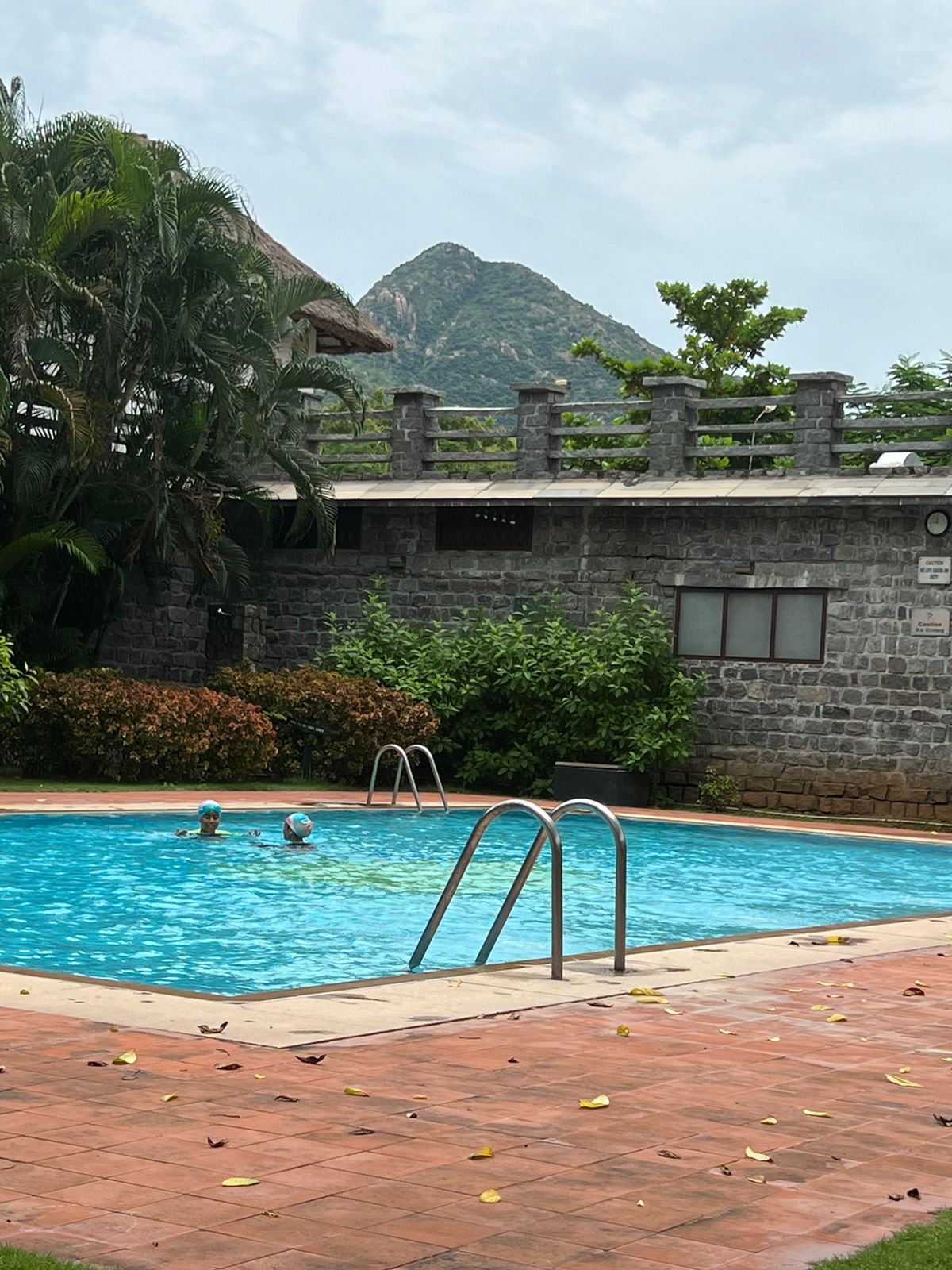
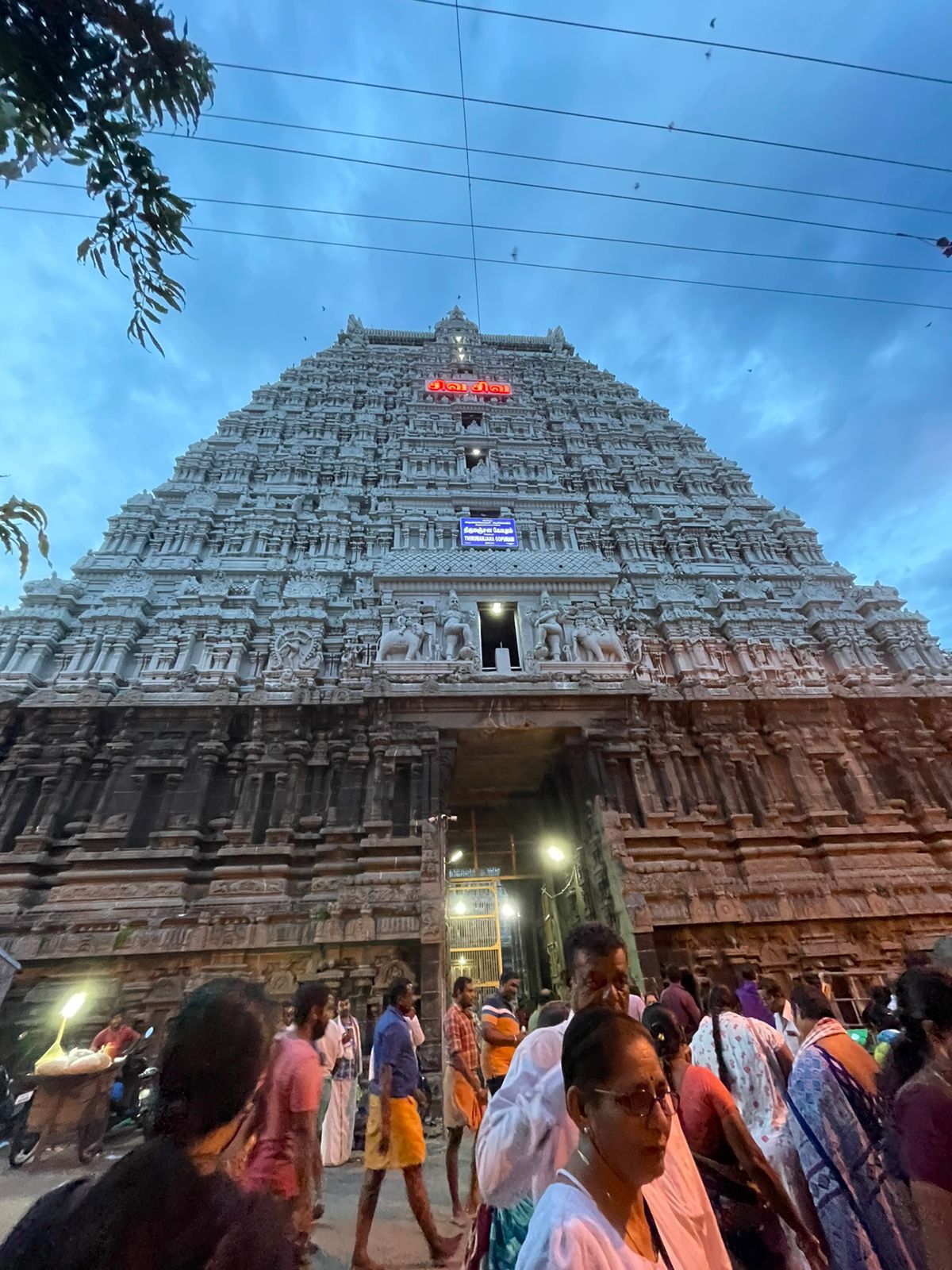 It is exactly a week since I ticked off something from my bucket list – a trip to Thiruvannamalai and completed the Giri Pradakshana (Giri Vallam; Parikrama) around Arunachala Hill. Also, was eagerly waiting to visit Ramanashram and meditate at the place where Ramana Maharshi spent most of his time.
 Nidugondi Speak